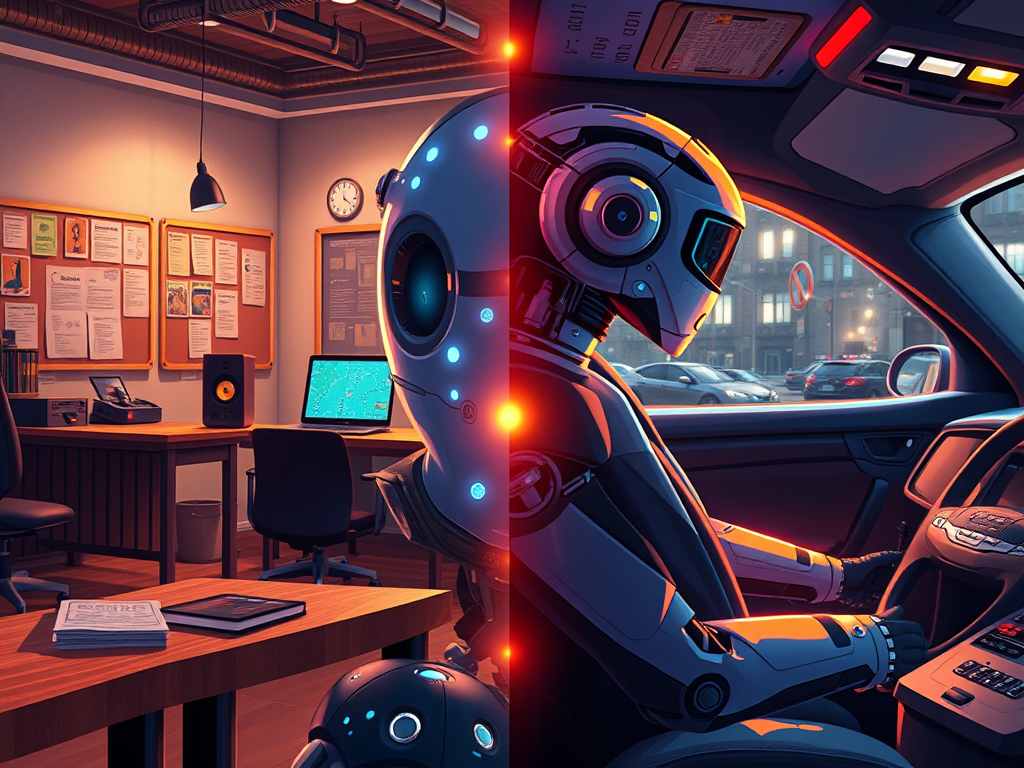
In the rapidly evolving landscape of artificial intelligence, a groundbreaking study has emerged that could reshape how we approach AI training. The latest research paper by Google Deepmind – SFT Memorizes, RL Generalizes: A Comparative Study of Foundation Model Post-training brings critical insights into how different training methods affect AI’s ability to learn and adapt. This fascinating discovery has significant implications for the future of AI development and its real-world applications.
1. Why This Matters
The distinction between memorization and true learning is crucial in AI, just as it is in human education. When an AI system merely memorizes patterns without understanding the underlying principles, it struggles to adapt to new situations – much like a student who memorizes facts without grasping the concepts. This new research illuminates the fundamental differences between two major training approaches: Supervised Fine-Tuning (SFT) and Reinforcement Learning (RL).
2. Understanding the Basics: Prompt, Model, and Verifier
At the core of AI problem-solving lies a three-step process that mirrors how humans learn through practice and feedback:
- The Prompt: Think of this as the question or challenge presented to the AI. It’s similar to a teacher asking a student to solve a problem.
- The Model: This is where the AI processes the information and generates a solution, much like a student working through a problem.
- The Verifier: This crucial component checks the AI’s solution and provides feedback, similar to a teacher grading and explaining what went right or wrong.
2.1. A Simple Practical Example
Let’s understand this with a straightforward example of teaching an AI to solve a card game:
The Task: Create an equation that equals 24 using four playing cards, where face cards (J, Q, K) count as 10.
Example Scenario:
Cards given: [5♠, 4♣, J♥, 6♦]
Here's how the AI learns:
- First Attempt:
Prompt: "Make 24 using [5, 4, 10, 6]"
AI Response: "5 + 4 + 10 + 6 = 25"
Verifier: "Incorrect. The sum is 25, not 24."
- Second Attempt:
Prompt: "Try again with [5, 4, 10, 6]"
AI Response: "(6 - 4) × 10 - 5 = 15"
Verifier: "Incorrect. Result is 15, not 24."
- Final Attempt:
Prompt: "One more try with [5, 4, 10, 6]"
AI Response: "(10 - 4) × (6 - 5) = 6 × 1 = 6"
Verifier: "Correct! You've found a valid solution."
The key difference between SFT and RL appears when we change the rules (like making J=11, Q=12, K=13):
- An AI trained with SFT might struggle because it memorized specific card combinations
- An AI trained with RL can adapt because it learned the underlying mathematical principles
2.2. Real-World Applications and Impact
This process isn’t just theoretical – it’s already transforming various industries:
- Autonomous Vehicles: Cars learning to navigate complex traffic situations through real-time feedback
- Customer Service: Chatbots that improve their responses based on user interactions
- Gaming AI: Systems that learn to master complex games through trial and error
- Healthcare: AI systems that adapt their diagnostic approaches based on outcomes
3. The Power of Reinforcement Learning
The study reveals a fascinating discovery: Reinforcement Learning helps AI systems develop true understanding rather than mere memorization. This is similar to how humans learn better through practice and feedback rather than simple memorization. When trained through RL:
- AI systems show better adaptation to new situations
- They demonstrate improved problem-solving capabilities
- They exhibit more robust performance in unfamiliar scenarios
3.1. Looking Ahead
The implications of this research extend far beyond academic interest. As we continue to integrate AI into more aspects of our lives, the ability of these systems to genuinely learn and adapt becomes increasingly crucial. This study points the way toward more robust and adaptable AI systems that can better serve human needs.
3.2. Practical Takeaways
For professionals working with AI:
- Consider incorporating RL approaches in training pipelines
- Focus on designing better feedback mechanisms
- Pay attention to how systems generalize to new situations
- Balance memorization and true learning in AI development
4. Conclusion
The distinction between memorization and true learning in AI systems isn’t just an academic concern – it’s fundamental to creating AI that can reliably serve human needs. As we continue to develop and deploy AI systems, understanding and implementing the right training approaches will be crucial for success.
This research opens new avenues for developing more robust and adaptable AI systems, bringing us closer to AI that doesn’t just memorize, but truly understands and adapts to the world around it.
What are your thoughts on the relationship between memorization and true learning in AI systems? Share your experiences and insights in the comments below.

 rajai.blog
Leave a comment